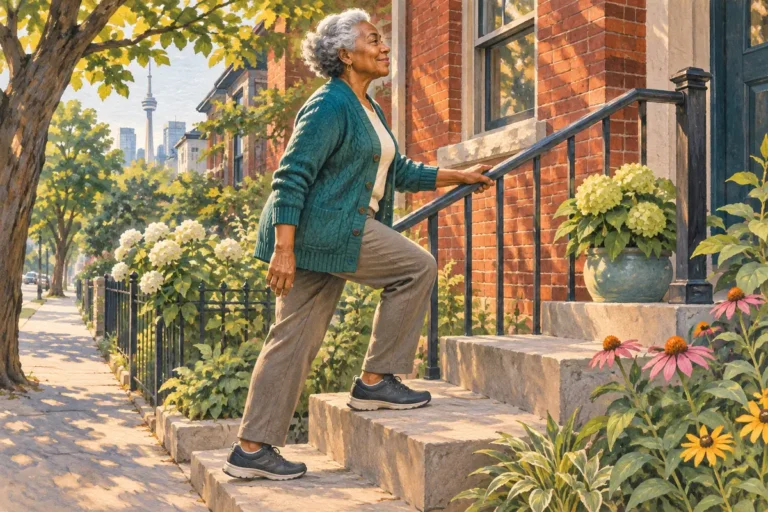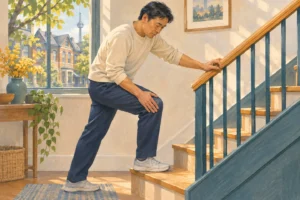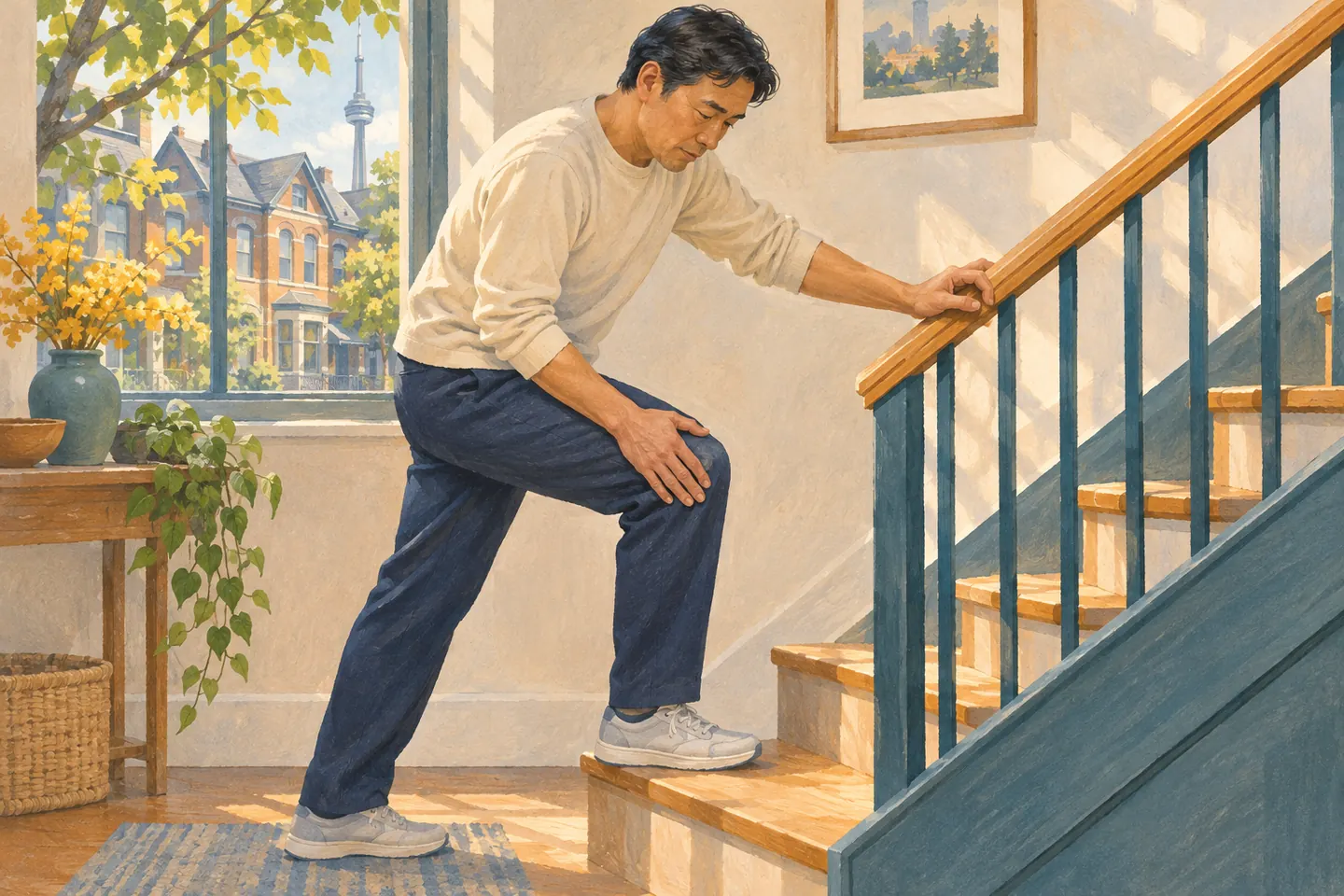
Knee pain tends to show up in ordinary moments: climbing stairs, standing up from a chair, or after a longer day on your feet than usual. One of the most useful clues about what is going on is simply where it hurts. This post walks through common patterns, and explains how an osteopathic approach looks at the knee as one part of a moving body.
Where the pain is can offer clues
The knee is made up of bone, cartilage, ligaments, tendons, muscles and small fluid-filled sacs that all work together. Because they sit so close, the location of your pain can point toward which tissues are involved. These are possibilities, not diagnoses.
- Around or behind the kneecap. Often felt on stairs, squats or after sitting with the knee bent. Repeated loading, a sudden change in activity, or muscle imbalance are common contributors.
- Just below or above the kneecap. Can point to the tendons that attach the thigh muscles to the shin, especially after a spike in activity.
- The inside of the knee. May relate to cartilage or ligament irritation, or to age-related joint changes that build up gradually.
- The outside of the knee. Often linked to tissues along the outer thigh that can become irritated with repetitive movement such as running, long walks or cycling.
- Behind the knee. Can come from tightness or swelling in the joint, or from the hamstring and calf muscles that attach nearby.
What you were doing matters too
Pain after a sudden twist suggests a different story than pain that builds slowly over a long walk. Many adults also notice knee symptoms after a change in routine, such as starting a new workout, gardening for hours, or returning to exercise after a break. Jot down when it started, what you were doing, and what makes it better or worse.
The knee does not work alone
The knee sits between the hip and the ankle, and it takes on the forces that pass through both. Stiffness in the hip, a limited ankle, or the way you shift weight through your pelvis and lower back can all change how the knee is loaded. This is why an osteopathic manual practitioner will often look beyond the sore spot.
What an osteopathic visit looks like
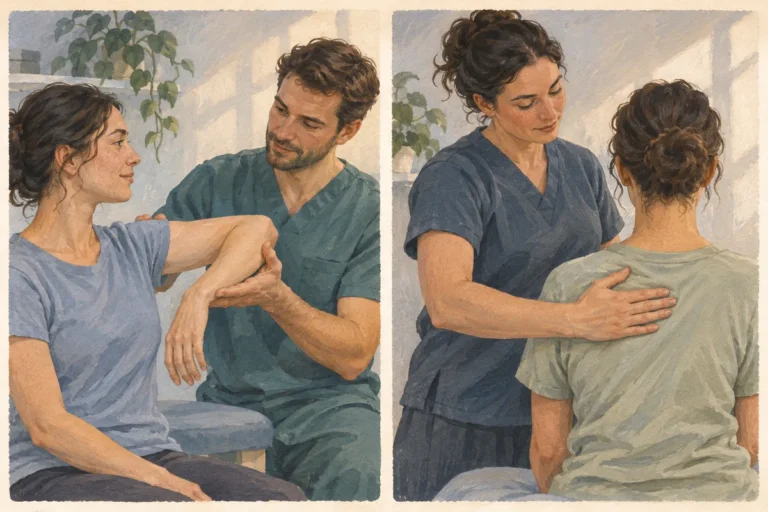
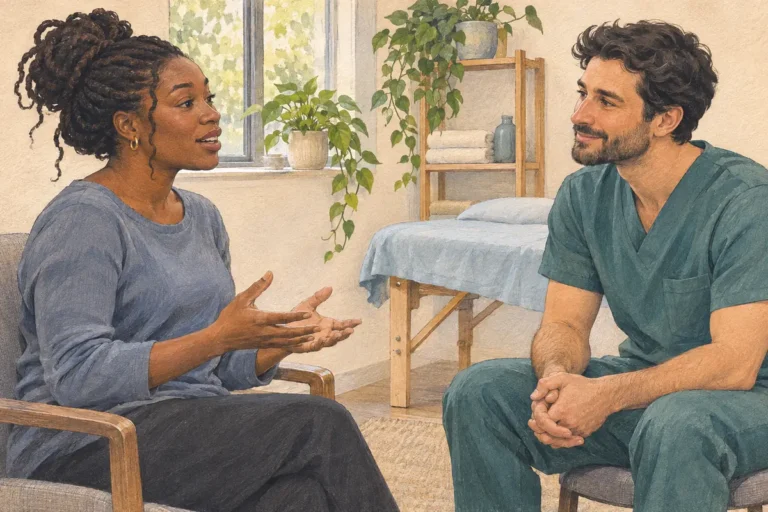
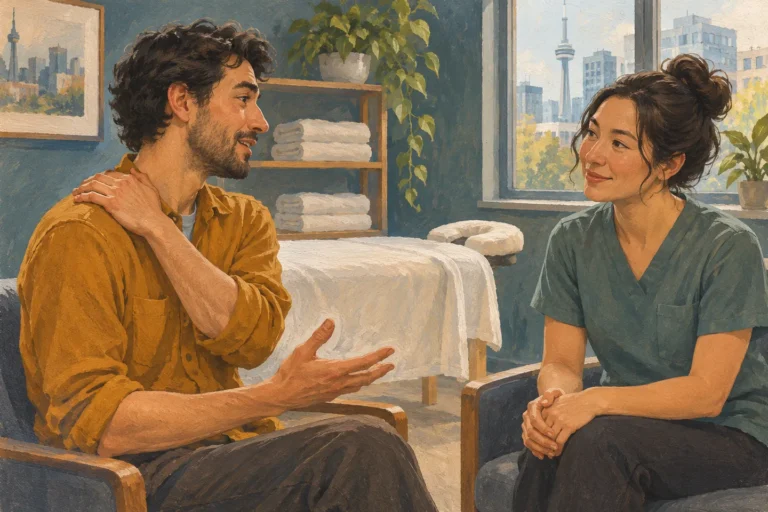
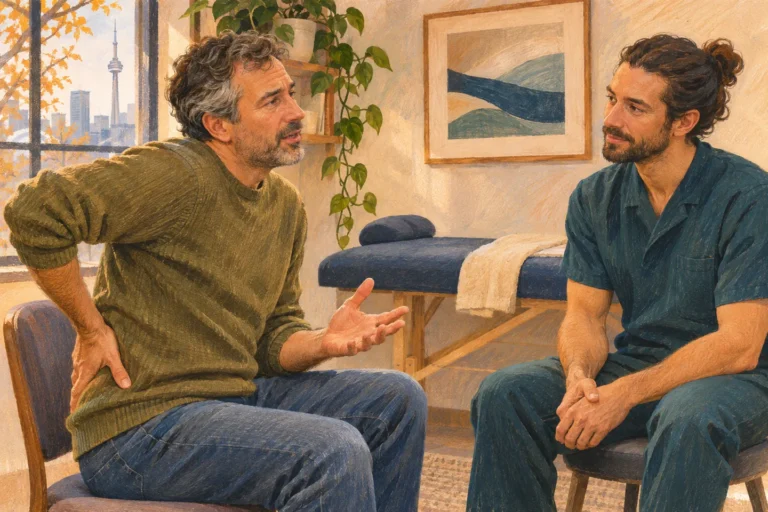
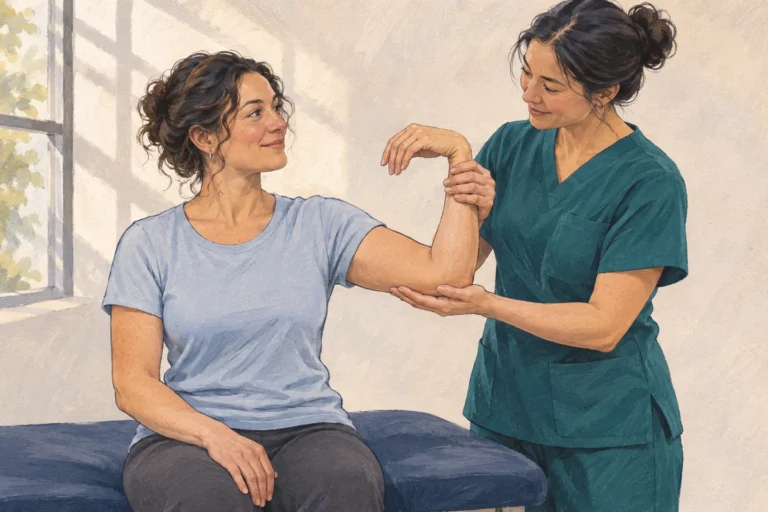
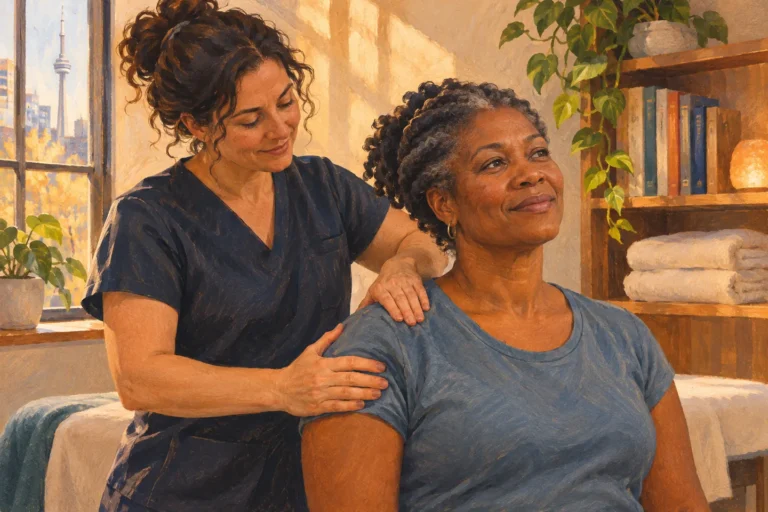
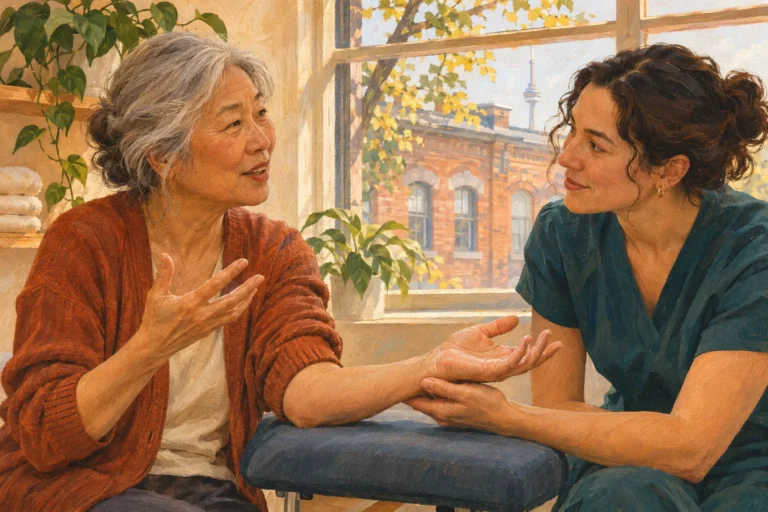
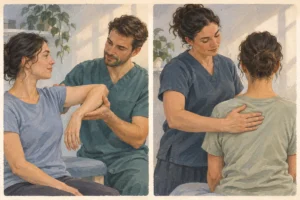
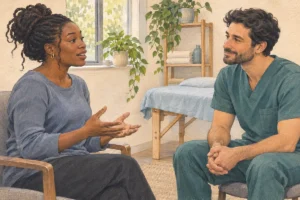
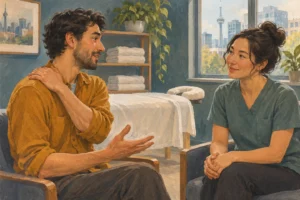
Your first visit starts with a conversation about your history, symptoms and activities. Your practitioner then assesses how you move, including your knee, hips, feet, pelvis and back, and uses gentle hands-on treatment shaped around what they find and your comfort. You will also get practical advice on movement and activity that fits your life.
Osteopathy is not a replacement for medical diagnosis or imaging. For pain around the kneecap, clinical guidelines recommend exercise therapy, including hip and thigh strengthening, as the main treatment, and some reviews give moderate support to manual therapy used alongside exercise. For many other knee problems, the evidence for hands-on treatment is limited. If your practitioner thinks something needs further investigation, they will tell you and can work alongside your doctor.
Everyday habits that help
- Keep moving with low-impact activity such as walking, cycling or swimming.
- Warm up before exercise, and increase intensity gradually.
- Build strength in the thighs and hips over time.
- Wear comfortable shoes that suit your activity.
- Back off, rather than push through, an activity that repeatedly causes pain.
- A cold pack wrapped in a towel for short periods, with a layer between the pack and your skin, can ease soreness after activity, and gentle warmth can ease stiffness.
See a doctor promptly if
- The knee is very swollen, red or hot.
- You cannot put weight on it, or cannot fully bend or straighten it.
- You have severe pain after an injury, or the joint looks out of shape.
- Pain appears suddenly without a clear cause, or keeps returning and interfering with daily life.
Also get medical advice if the knee locks, catches painfully or gives way, if you have a fever or feel unwell along with a hot, swollen joint, if pain wakes you at night, or if it has not improved after a few weeks.
Book an osteopathy visit in Toronto
If knee pain is limiting what you do, a first osteopathy visit is a good place to talk it through. We take time to listen, explain what we find, and shape care around your comfort.
Integrated Bodywork · 55 Eglinton Avenue East, Suite 700, Toronto · 647-388-7435
This article is for general information and is not a substitute for medical advice. Please speak with your doctor about any health concerns.