Many people notice that their body does not respond quite the way it did years ago. Bones are part of that story. This post explains what changes in bones as we age, which signs are worth paying attention to, what everyday habits help, and where osteopathy fits.
What changes in bones over time
Bones are living tissue. Old bone is constantly broken down and replaced with new bone, a process called remodelling. In younger years the body builds bone faster than it removes it. Later in life the balance can shift, and bone density may slowly decline. Age, activity level, nutrition, hormonal changes and long-term habits all play a part.
These changes are usually gradual and often cause no symptoms at first, which is why it helps to notice the small signs.
Signs worth paying attention to
- Changes in height or posture. A gradual loss of height or a more rounded, forward-leaning posture. Osteoporosis Canada’s guideline lists height loss of more than 2 cm over time, or more than 6 cm compared with your younger years, as a reason for further assessment.
- Ongoing or recurring back pain, especially alongside changes in posture or movement.
- A fracture after a minor fall or bump. This is worth raising with your doctor.
- Losing confidence in how you move. Avoiding activities because of stiffness, discomfort or fear of falling.
None of these confirm a bone problem on their own, but they are good reasons to have a conversation with your doctor.
Habits that support strong bones
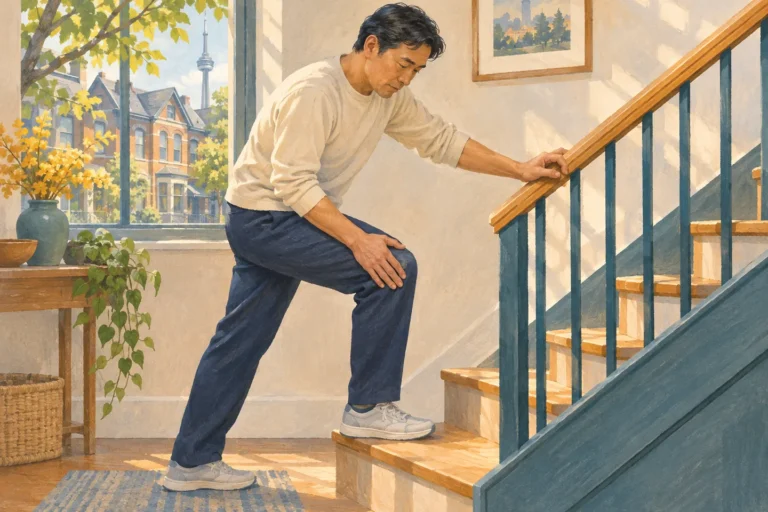
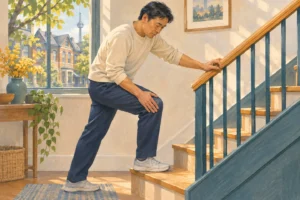
- Stay active. Weight-bearing activity such as walking, hiking and climbing stairs gives bones useful demands to respond to. Strength training supports muscles and posture, and Osteoporosis Canada’s guideline recommends balance, functional and progressive resistance training more than twice a week to help reduce falls and maintain bone strength.
- Practise balance. Balance exercises can improve stability and may reduce the risk of falls.
- Eat for your bones. Calcium, vitamin D and protein all matter, along with a varied diet rich in vegetables, fruit and whole foods. Osteoporosis Canada suggests meeting calcium needs mainly through food (about 1,200 mg a day for women over 50 and men over 70, and 1,000 mg for men aged 50 to 70), and Health Canada recommends that adults 50 and over take at least 400 IU of vitamin D daily along with vitamin D-rich foods. Check with your doctor about what is right for you.
- Get outside. Outdoor activity combines movement with daylight, which is especially worth remembering in the colder months.
- Protect your sleep and manage stress. Recovery and daily rhythms matter for overall health.
Where osteopathy fits
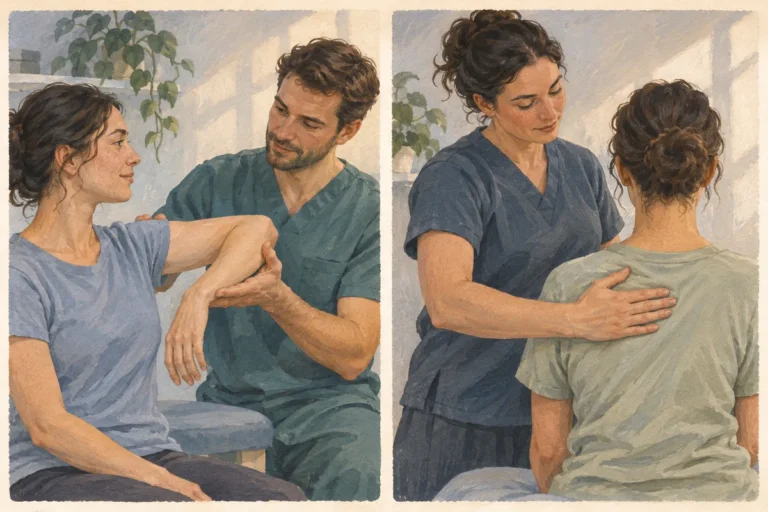
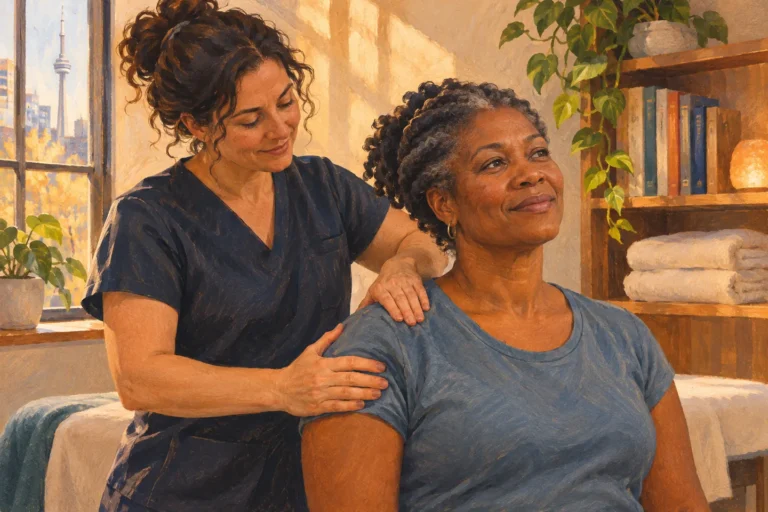
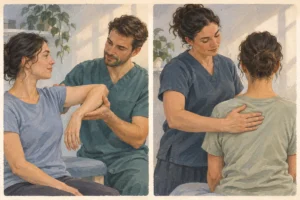
Osteopathy cannot treat or reverse bone loss, and we do not claim it can. What an osteopathic approach can do is look at the things around bone health that affect how you move and feel:
- How you stand, sit and carry yourself, and how your spine and ribcage move.
- Stiffness or tension in the back, hips and shoulders that may limit comfortable movement.
- Movement habits and practical ways to stay active with confidence.
Treatment is gentle and adapted to you. If you have osteoporosis, low bone density, or have had a fracture, tell your practitioner at the start of your visit so they can shape the assessment and treatment around it.
See your doctor if
- You have a fracture after a minor fall or bump.
- You have sudden or severe back pain.
- You notice sudden or marked changes in posture, height, strength or mobility.
Your doctor can talk with you about bone density testing. Osteoporosis Canada’s guideline suggests testing for people aged 70 and over, for people 65 to 69 with a risk factor, and for people 50 to 64 who have had a fracture or have two or more risk factors, such as smoking or three or more alcoholic drinks a day.
Book an osteopathy visit in Toronto
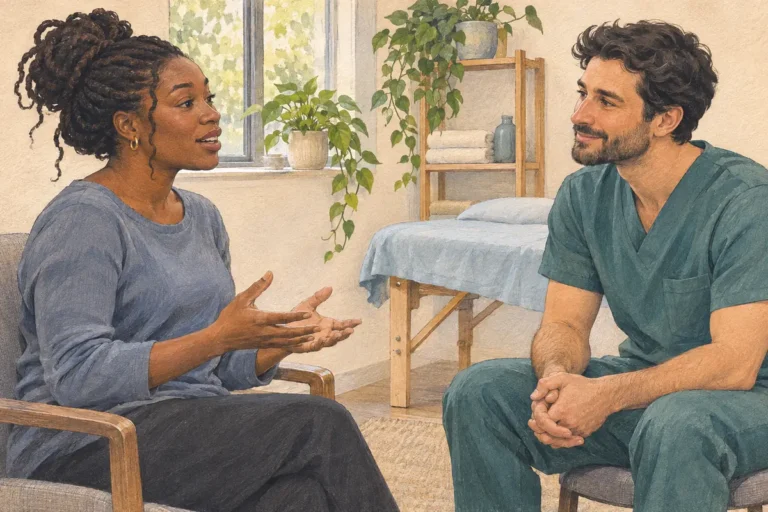
If stiffness, posture changes or a loss of confidence in movement are on your mind, a first visit is a good place to start. We take time to listen, explain what we find, and shape care around your comfort.
Integrated Bodywork · 55 Eglinton Avenue East, Suite 700, Toronto · 647-388-7435
This article is for general information and is not a substitute for medical advice. Please speak with your doctor about any health concerns.