The Gut-Brain Connection: What It Means for Your Body, and Where Osteopathy Fits

By Integrated Bodywork

The Gut-Brain Connection: What It Means for Your Body, and Where Osteopathy Fits

The Gut-Brain Connection: What It Means for Your Body, and Where Osteopathy Fits

Integrated Bodywork · Osteopathy at Yonge & Eglinton, Toronto
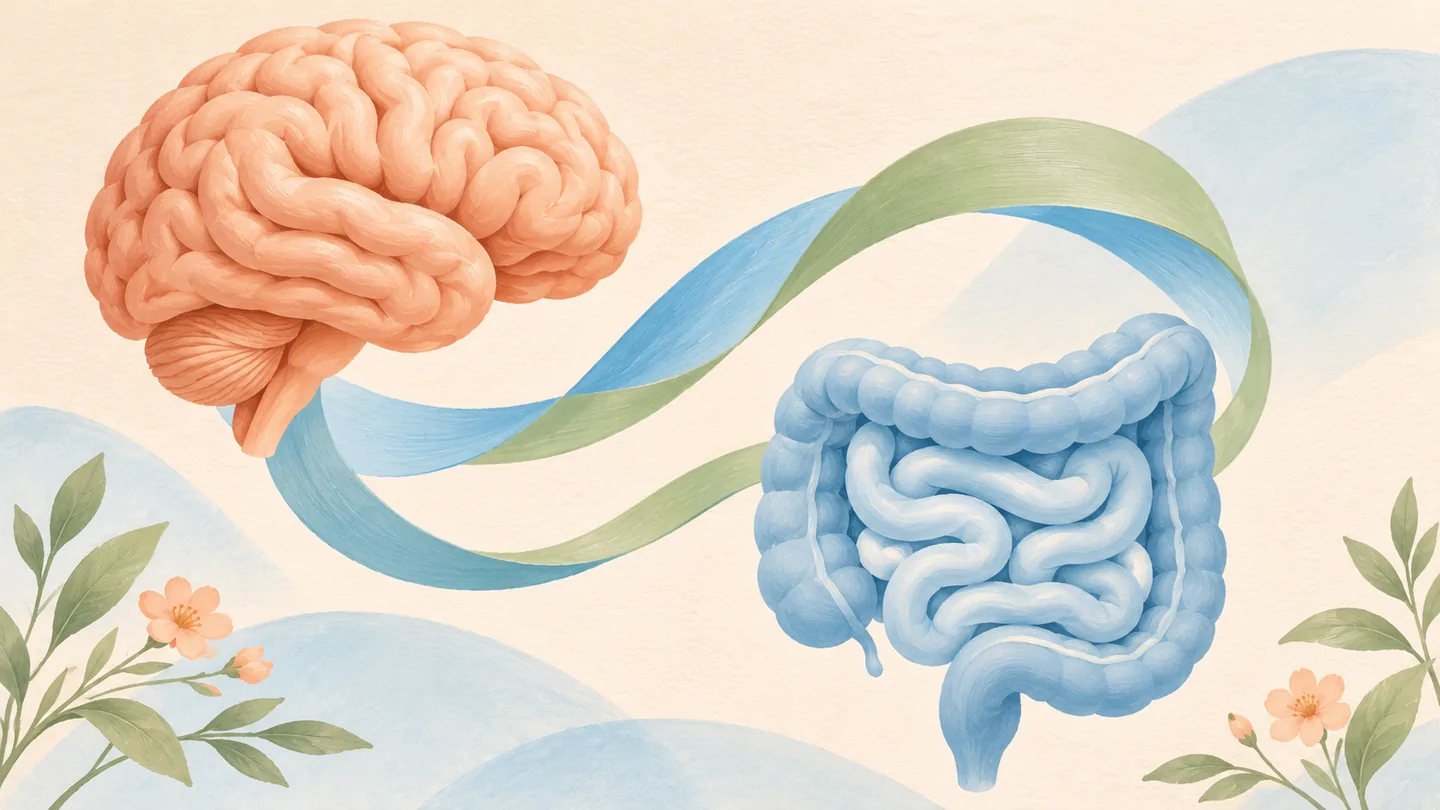
Illustration of the brain and intestines connected by flowing ribbons, representing gut–brain communication.
If you have ever felt “butterflies” before a big meeting, or noticed your stomach acting up during a stressful week, you have already experienced the gut-brain connection. It is one of the most active areas of health research, and it helps explain why how we feel and how we digest are so closely linked. In this post, we explain what the gut-brain axis is, what researchers do and don’t know yet, and how an osteopathic approach looks at the whole person when digestive discomfort, stress and body tension show up together.

What is the gut-brain axis?

The gut-brain axis is the two-way communication network between your digestive system and your brain. Messages travel in both directions through several routes:
  • Nerves. The vagus nerve is a major pathway between the brain and the digestive tract. Roughly 80 percent of its fibres carry information up from the body to the brain, so the brain is constantly receiving updates from the gut.
  • The gut’s own nervous system. The digestive tract has a large network of nerve cells, often called the enteric nervous system, that helps coordinate digestion on its own.
  • Chemical messengers. Hormones and other signalling molecules help the gut and brain share information, including about stress and hunger.
  • The immune system and gut bacteria. The trillions of microbes in your gut interact with your immune system and produce compounds that may influence how the nervous system behaves.
Because the connection runs both ways, a stressful period can affect digestion, and ongoing digestive discomfort can affect mood, sleep and energy.

How it shows up in everyday life

Stress and digestion. When your brain senses stress, the body releases hormones such as cortisol. These can change how quickly food moves through the gut and how sensitive it feels, which is why some people get a tight stomach, an urgent bowel or a lost appetite before a big event. Sleep. Sleep, meal timing and digestion all follow daily rhythms. A restless night can change your appetite the next day, and digestive discomfort can make it harder to sleep. Appetite and mood. Hormones released around meals tell the brain when you are hungry or full, and emotions such as stress or boredom can change what and how much you want to eat.

What the research does (and doesn’t) tell us

Research in this area is growing quickly, but it is still early. Studies have linked the gut and its microbes to mood, stress responses and pain sensitivity. However, many findings come from animal studies or small human studies, and links do not always mean cause and effect. Be cautious of any source that promises a simple fix for complex symptoms. What is well accepted is that stress, sleep, food, movement and digestion all influence each other. That is a useful way to think about your health, even while scientists work out the details.

An osteopathic way of looking at it

Illustration of a practitioner gently assessing a clothed patient's back and ribcage while he rests on his side.
Osteopathy is a hands-on, manual approach to care. Practitioners look at how the body’s structures move and relate to one another, including the spine, ribs, diaphragm, pelvis and abdomen, and how a person’s daily life, stress and habits fit into the picture. In practice, someone who comes in with digestive discomfort often mentions other things too: a tight upper back or ribcage, shallow breathing when stressed, lower back or pelvic tension, or poor sleep. An osteopathic assessment is a way to look at these patterns together instead of treating each symptom separately. A visit typically includes:
  • A conversation about your health history, symptoms, stress, sleep and daily routine.
  • A hands-on assessment of how your body moves and where you hold tension.
  • Gentle manual treatment shaped around your findings and your comfort, with explanation along the way.
  • Practical suggestions you can use at home, such as breathing, movement and posture habits.
It is worth being clear about the limits. Osteopathic care is not a treatment for digestive disease, and the evidence is limited. Small studies of osteopathic manual treatment for irritable bowel syndrome suggest possible short-term benefits for abdominal pain and constipation, but reviews rate the quality of that evidence as low, and the overall evidence for digestive conditions is limited and inconclusive. What osteopathy can offer is a careful look at the body as a whole, and support for the tension and movement patterns that often travel with stress.

When to see your doctor first

Some digestive symptoms need medical assessment before anything else. See your doctor promptly if you have blood in your stool, unexplained weight loss, ongoing vomiting, severe or worsening abdominal pain, trouble swallowing, or symptoms that wake you at night. Our practitioners are happy to work alongside your doctor.

Everyday habits that support the gut-brain connection

Woman taking a quiet breathing break with a hand resting on her abdomen and a journal nearby.
These are general wellness suggestions, not medical advice:
  • Eat regular meals and include a variety of fibre-rich foods.
  • Slow down at meals and try a few slow breaths before eating.
  • Protect your sleep, since poor sleep and digestion often affect each other.
  • Move daily. Even a walk can help.
  • Find ways to ease stress that fit your life.
Try a simple journal. For a week or two, jot down what you eat, how your digestion feels and what is happening in your day, such as a busy meeting or a poor night of sleep. Patterns often show up, and they are useful to bring to your doctor or your practitioner.

Book an osteopathy visit in Toronto

If stress, body tension and digestive discomfort seem to go together for you, a first osteopathy visit is a good place to start a conversation about what is going on. We take time to listen, explain what we find, and shape care around your comfort. Integrated Bodywork · 55 Eglinton Avenue East, Suite 700, Toronto · 647-388-7435 Book osteopathy online

References

Buffone F, Tarantino AG, Belloni F, et al. Effectiveness of osteopathic manipulative treatment in adults with irritable bowel syndrome: a systematic review and meta-analysis. Healthcare. 2023;11(17):2442. doi:10.3390/healthcare11172442

Cryan JF, O’Riordan KJ, Cowan CSM, et al. The microbiota-gut-brain axis. Physiological Reviews. 2019;99(4):1877–2013. doi:10.1152/physrev.00018.2018

This article is for general information and is not a substitute for medical advice. Please speak with your doctor about any health concerns.



Explore our services

Would you like to book a visit?

Find a time that works for you at our Yonge & Eglinton clinic.

Book an appointment
Striving To Be Toronto's Best Osteopathy And Massage Therapy clinic

Allowing the body to self-heal without medicine

FAQ

The aim of a Osteopathic Manual Practitioner is to optimize the self-healing mechanisms of the body.

The frequency of treatments is based on the initial assessment and treatment. The decision on how often you will need treatment is based on allowing enough time between visits to allow your body to integrate the changes that occur from one treatment to the next.

While very often being used to treat back pain, osteopathic treatment is effective in a wide variety of health complaints. Osteopathy has been successful in treating the following:

  • Acute or Chronic Pain
  • Digestive Problems
  • Muscle Spasms
  • Respiratory Difficulties
  • Postural Problems

It can also successfully treat migraines, dysmenorrheal, sciatica, carpal tunnel syndrome, fibromyalgia, tinnitus, vertigo, pain and diseases.

Osteopathy is an established recognized system of healthcare which relies on manual contact for assessment and treatment. It integrates the whole body, including the mind with emphasis on allowing the body’s intrinsic tendency for self-healing without pharmacological use.

Osteopathy views a person as a single unit comprised of body, mind, and spirit. In the osteopathic perspective, one needs to treat the whole person. Instead of viewing the body as a machine, osteopathy looks at pain as the result of complex interactions between physical factors as well as psychological and social factors, also referred to as the “biopsychosocial” approach. The perception of pain is not merely a response to physical injury, but is also related to the patient’s own emotional framework as well as their physical and social environments.

An Osteopathic Manual Practitioner works to build a trusting relationship with their patient to help understand if there are other non-physical factors that could be contributing to their chronic pain condition. This allows the practitioner to develop a more comprehensive pain management and reduction plan to help their patient find relief.