Stress is not only something we feel in our minds. It shows up in the body: a tight neck, a clenched jaw, shallow breathing, a restless night. This post explains why that happens, what everyday habits can help, and how an osteopathic approach looks at stress and tension together.
Stress is normal; the trouble is no recovery time
When your brain senses a challenge, the body mounts a stress response. Hormones such as cortisol help you stay alert and meet the moment. That is useful in the short term. The difficulty comes when demands keep coming and there is little time to wind down, so the body stays on alert.
Cortisol often gets a bad reputation, but the goal is not to eliminate it. In a healthy stress response, hormone levels return to normal once the challenge has passed. It is a body that can respond to a challenge and then settle again.
How stress can show up physically
- Tight or aching neck, shoulders and upper back.
- Clenched jaw or tension headaches.
- Shallow or rapid breathing.
- Feeling tired in the day but wired at night.
- Poor sleep, or waking up unrefreshed.
- Changes in appetite or digestion.
These symptoms have many possible causes, so they are not proof of a particular problem. But if several of them appear during a stressful period, stress may be part of the picture.
Why the body holds on to tension
When we are on alert, muscles brace, shoulders rise and breathing moves up into the chest. If that continues for weeks, the muscles around the neck, ribs and back can stay tight, and movement can feel restricted. Long hours at a desk, poor sleep and little movement can make the pattern stronger.
Habits that help
- Keep a steady sleep schedule, and get natural daylight in the morning. A systematic review of studies in healthy adults linked brighter morning light with better self-reported sleep and brighter evening light with worse sleep.
- Mind your caffeine. Health Canada’s limit for healthy adults is 400 mg a day, about three 8-ounce cups of brewed coffee. Caffeine can steal sleep without you noticing. In one study, about three cups of coffee six hours before bed cost people over an hour of sleep. Light sleepers should stop by early afternoon.
- Eat regularly. Skipping meals and relying on sugary snacks can leave energy swinging up and down.
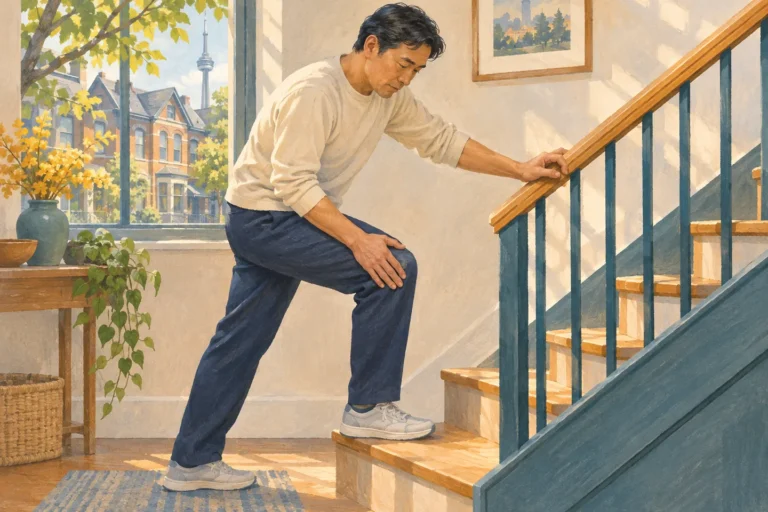
- Balance exercise and rest. Regular movement helps mood and sleep, but pushing hard while exhausted adds more load. A walk or gentle stretching may serve you better on a rough day.
- Build in small recovery moments. A few minutes of slow breathing helps the body step down, and a break from screens for an hour or so before bed can help too.
Where osteopathy fits
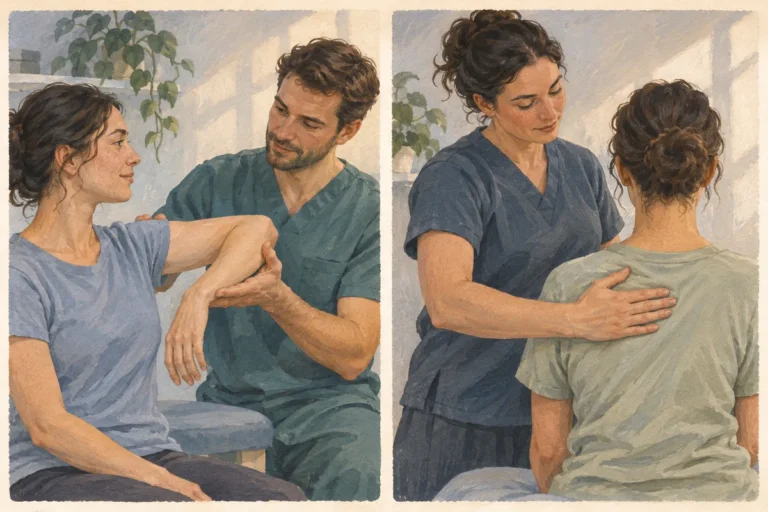
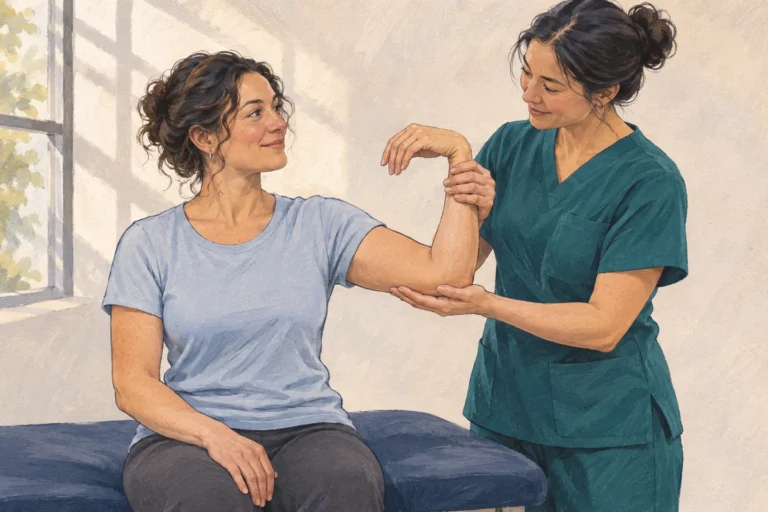
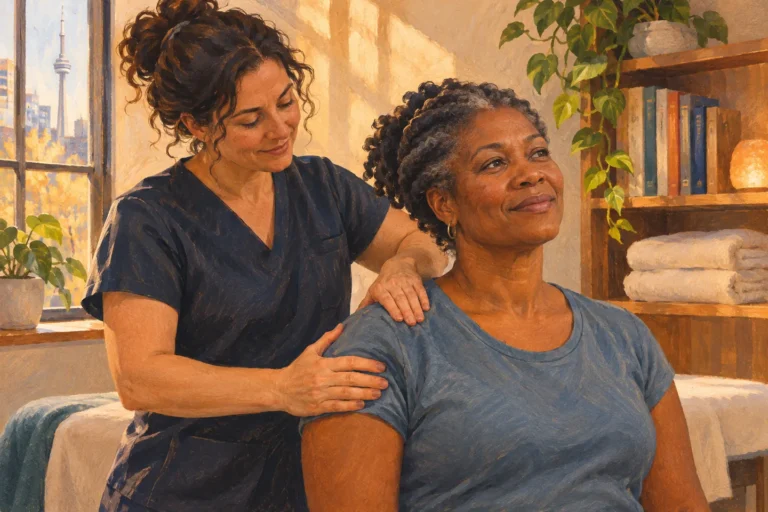
Osteopathy is a hands-on approach that looks at how your body is holding itself. For someone dealing with stress and tension, your practitioner may assess the neck, upper back, ribcage, diaphragm and posture, and use gentle manual treatment to ease areas of restriction, along with practical suggestions on breathing, movement and daily habits. What we can offer is time, attention and care for the physical side of stress, and help with the tension that tends to travel with it.
When to talk to your doctor
See your doctor if you have ongoing low mood, panic attacks, difficulty sleeping for weeks, thoughts of harming yourself, or any symptom that worries you. If you are in crisis, call or text 988, Canada’s suicide crisis helpline, or call 911.
Get emergency help right away for chest pain, especially with shortness of breath, sweating, dizziness, nausea, or pain in the jaw, back, shoulder or arm. These can be warning signs of a heart attack and should not be assumed to be stress.
Book an osteopathy visit in Toronto
If stress has settled into your neck, back or breathing, a first osteopathy visit can be a good place to start. We take time to listen, explain what we find, and shape care around your comfort.
Integrated Bodywork · 55 Eglinton Avenue East, Suite 700, Toronto · 647-388-7435
References
Dautovich ND, Schreiber DR, Imel JL, et al. A systematic review of the amount and timing of light in association with objective and subjective sleep outcomes in community-dwelling adults. Sleep Health. 2019;5(1):31–48. doi:10.1016/j.sleh.2018.09.006
Drake C, Roehrs T, Shambroom J, Roth T. Caffeine effects on sleep taken 0, 3, or 6 hours before going to bed. Journal of Clinical Sleep Medicine. 2013;9(11):1195–1200. doi:10.5664/jcsm.3170
This article is for general information and is not a substitute for medical advice. Please speak with your doctor about any health concerns.