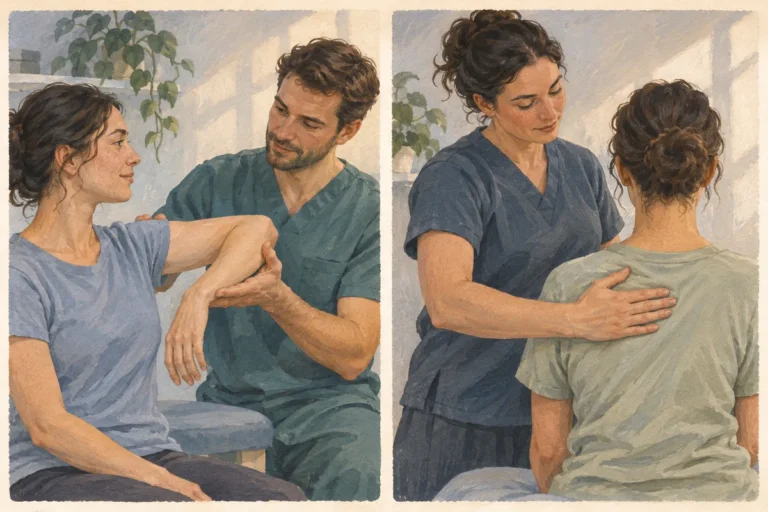
A first appointment can come with a few questions: What will happen? What should I wear? Will there be time to explain what has been bothering me? At Integrated Bodywork, our aim is to make that first conversation feel comfortable and unhurried.
This guide explains what to expect when considering osteopathic manual therapy at Yonge & Eglinton in Toronto.
Start with what matters to you
Your visit begins with a conversation about your concerns, health history and goals. You might want to describe back or neck discomfort, stiffness after a day at a desk, or a movement that has become difficult. It is also helpful to explain what you would like to feel more comfortable doing in everyday life.
You do not need to arrive with the “right” words or a diagnosis. Tell your practitioner what you have noticed, when it began, and anything that makes it feel better or worse. Share relevant injuries, operations, medications and other care you are receiving.
Assessment and a shared plan
Your practitioner will discuss an assessment suited to your situation. This may include observing how you move and using hands-on assessment. They will explain what they propose and give you an opportunity to ask questions before proceeding.
Assessment helps guide the conversation about whether osteopathic manual therapy is appropriate, what your preferences are, and whether another type of care should be considered. There is no single treatment plan that suits everyone.
Your comfort and consent guide the visit
You can ask why a technique is being suggested, request an adjustment, decline part of an assessment or treatment, or ask to pause or stop. Let your practitioner know about any position, pressure or movement that feels uncomfortable. You are welcome to ask for an explanation at any stage.
What to wear and bring
- Choose comfortable clothing that allows you to move.
- Bring relevant health information you would like to discuss.
- Make a short list of your questions, especially if it helps you remember them.
- Tell us about accessibility or comfort needs before your visit so we can discuss arrangements.
Questions you may want to ask
- What did you notice during the assessment?
- What are the options, and what are their limitations?
- How will we decide whether care is helping me?
- What should I do if something feels different after my visit?
A useful care plan should make sense to you. The number and spacing of visits should be discussed individually, rather than assumed in advance.
Visiting Integrated Bodywork in Midtown Toronto
Our clinic is at 55 Eglinton Avenue East, Suite 700, near Yonge & Eglinton. You can learn more about Ki-Hun Lee and Vesna Galenic before choosing a practitioner.
When you feel ready, view osteopathy appointments through Jane. If you are unsure which service to select, contact the clinic before booking and we can help you understand the options.